- HUMANE DEBRIS
- Posts
- 021: OLIVES & HOBBY HORSES
021: OLIVES & HOBBY HORSES
Ride the Post-Social Range with maverick writer, Kek-w

Kek W
March 23, 2026

Good morning from Yeovil, South Somerset, where the streets are littered with hobby horses…

olives…

And… oh!

It’s probably hard for you to piece together what might have happened in that sequence of images (perhaps you could use it as a morning writing exercise?) unless you study it with the forensic lens of Folklore - which we’ll do in a moment. Yeovil is, of course, a Nexus-Hub of Weird. A Barometer of Strange. To me, the above feels like a scene from some banal, small market town version of Les Chants de Maldoror (“As beautiful as a chance encounter on a dissecting table of a sewing-machine and an umbrella”, etc).
If I’ve not written lately it’s because I’ve been writing a lot lately. And some other stuff. Life, innit. I keep saying I’m going to make these broadcasts shorter, but it does actually look like Googlemail crops emails over a certain length. So: if you have Googlemail and have been getting issue-episodes of Humane Debris that look like they’ve been foreshortened (they should always end with a picture of a cat), then I apologise and will be more mindful of that in the future. But hobby horses are pretty freaky, though, aren’t they?

Apparently, “Hobbyhorsing” is still a thing in the UK, where hobby horse gymkhanas are regularly staged, but it’s an even bigger deal in Finland, apparently, where over 10,000 young women and girls take part annually in competitive events. No, I’m not making this up.
The word “Hobby” dates back to the 14th century Middle English word, hobyn, meaning a small horse or pony, one that walks at a slow speed, an amble. One that’s been hobbled, I guess. Old French used similar words: haubby or hobin. Hobin was, at one point, an alternative for the name, Robin. Hobin Hood, anyone? White Kennett, the antiquarian and Vicar of Ambrosden, wrote in his 1695 book, Parochial Antiquities Attempted in the History of Ambrosden: Burcester, and Other Adjacent Parts in the Counties of Oxford and Bucks, that "Our ploughmen to some one of their cart-horses generally give the name of Hobin”. Another popular variant on the name Robin / Hobin was Dobbin. And that, dear reader, is why we often generically name horses, particularly in children’s tales, “Dobbin”.
We could probably spend all day taking about how hobby horses intersect with British Folk Lore. For example, the Hooden Horse of East Kent:

In this instance, the hobby horse’s head is still on a stick carried by its rider-operator, but that person is shrouded or hooded (“hoodened”). If this wasn’t already terrifying enough, the horse’s jaw is designed to snap open and shut, sometimes with nails for teeth. Closer to home down here in the West Country we have the legendary ‘Obby ‘Oss of Padstow, Cornwall - a town now known as Rick Stein on Sea, since the former TV chef now owns most of the eateries, hotels and shops in the area. There are actually two ‘obby ‘osses that appear on the May Day ‘Obby ‘Oss festival: Old ‘Oss and Blue Ribbon ‘Oss. Elements of the festival pre-date Christianity - it’s almost certainly a pagan fertility / Beltane ritual of some sort that has transmuted into a tourist attraction. ’Obby ‘osses appear in Beunans Meriasek, a Cornish play completed in 1504 about the life of Meriasek, a 6th century Cornish saint. They are not a new phenomenon. Down here in the post-Celtic wilds, we basically like to dress up as animal spirits and get freaky.
Not to be outdone by the Cornish, bless ‘em, but here in Somerset three hobby horses appear on May Eve and May Day in Minehead, up in the north of the county: the Original Sailor's Horse, the Traditional Sailor's Horse and the Town Horse. These are elaborate boat-shaped wooden ’horses’ bedecked with ribbons and accompanied by groups of roving musicians. A more recent Somerset ‘obby ‘oss innovation is the Blackened Goregrind ‘Oss, witnessed in Bridgwater during a show by the Austrian Grind band VxPxOxAxAxWxAxMxC, in which they encouraged people in the moshpit to convene under a large black shroud and run blindly round in a circle. This is now Somerset ‘Oss Canon.

But down here, in cash-strapped South Somerset, we like to celebrate the onset of Spring more modestly (well, less modestly, perhaps) with an charity-shop ‘obby ‘oss, some olives and a discarded bra.
Yr pal, Kek
The Skeleton Has The Shell. Paul Delvaux, 1944. Painted during his Skeleton Phase, possibly as a reaction, I would imagine to WW2 and the death of his father. He also went through a period of painting public transport.

Hello. I’m Kek. I’m a multi-genre writer. You like Weird Lit, Horror, Science Fantasy, Gothic Romance? Cool. I got that covered. I also make art.
I just recently started a Ko-Fi here. The plan is for any tips / donations / shop sales to help fund my next chapbook. I’m trying to raise £200 to get it printed and to pay a cover artist. Consider it a lo-fi kickstarter. An experiment. Anyone who kicks in a couple quid or buys from my Ko-Fi Shop will get a shout-out in the book’s foreword. Things I sell in the Ko-Fi Shop will be cheaperer there than on other sites. I’d like to reward the people who follow me on there and you wonderful weirdos who have stuck with me on Humane Debris. I’m hoping to also put up some new short stories which will be downloadable as PDFs or Epubs, perhaps, maybe with illustrations. Like I said, it’s an experiment. Let’s get bubblin’!
This is a garishly interesting and typically Italian Fumetti take on Gothic Romance / Haunted house Fict. CyberGothic, anyone? CyborgGoth?
Terror Blu #61. Ediperiodici, 1979. Art: Lorenzo Lepori.

“Louise and Pamela are the nieces of a very rich and perverse uncle, the latter having to inherit all the estate after the old man's death. The latter, knowing that he was doomed, equipped his house with a whole mechanism and an electronic brain like his own, intended to take over after his death. The beautiful and blonde Louise hastens the death of her uncle during a violent argument, then quickly hatches a Machiavellian plan, so that the mechanics of the house turn against her sister.” Well, of course. Sure.
SLATE UPDATE
Speaking of Gothic Romance books: first, a quick micro-plug for MEET THE SHRIVELWOODS, my recent 40-ish page chapbook which contains two darkly humorous and absurd Weird Romance tales from darkest Vermont:
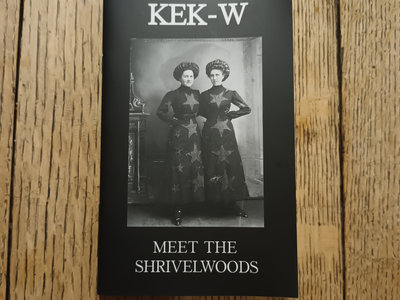
Meanwhile: my brand new Weird Horror book, UNNATURAL SCIENCE is now up for pre-order on Bandcamp and will start shipping on March 31st when copies come back from the printers (though I’m hoping, fingers crossed they will arrive before that). Either way, I’ll mail ‘em out soon as they appear.

“BIO HORROR! When your mind, body and Nature itself turn against you!
“Four stories that fuse Weird Fiction, Body Horror, Victorian “Penny Bloods” and British Post-War Pulp into a queasy brew of para-anatomical terror.”
This is a big one - 30k+ words - two long 15k stories and two short-short ones. It also contains a foreword that talks about the stories’ themes, their influences and my general thinking, so I won’t repeat myself here, ‘cept to say that this book mostly plays around in the anatomical ball-pit of Weird Body Horror, trying to imagine what the genre might look like from a Victorian perspective or a 1950s post-war one. But as I started to write this, I started wondering if The Strange Case of Dr Jekyll and Mr Hyde is possibly a Body Horror novel? And what about Frankenstein or The Hunchback of Notre-Dame or The Phantom of The Opera? (it’s something we could probably debate ‘til the cows come home). It didn’t necessarily all start with Cronenberg.
At what point did Gothic become some sort of ur-form of Body Horror? Jekyll and Hyde is concerned with duality, hidden selves, etc, but doesn’t The Gothic also represent the Dark Side, the Id, Fear of / Revulsion at Self; the Persistence of Shadow and Old Dead Stuff symbolically represented by moonlit ruins, old paintings, mirrors, etc, etc? Arguably, Body Horror was just yet another new iteration of Gothic; it shed / stepped out of its own dead skin, dragging its diseased, hideously deformed shadow behind it. Body Horror has always had, imho, a psychological component to it; the protagonists’ mental baggage is sometimes their real deformity, their ‘otherness’; they inwardly mutate in response to some social or environmental pressure or anxiety and this inner transformation is then mirrored by a physical change (rather than vice-versa). The disease and the disaster arise from within. It’s certainly become more overt in the current wave of BH, for example the films of Brandon Cronenberg and Coralie Fargeat.
Anyways. On a lighter note, did you know that Robert Louis Stevenson wrote The Strange Case of Dr Jekyll and Mr Hyde in Bournemouth - which feels pretty Un-Gothic and about as far away from the fog-shrouded streets of Victorian London as you can imagine. (Though someone will now write and tell me about the twisted dark hidden history of Bournemouth, I hope). After abandoning the book following criticism from his wife, he supposedly rewrote the bulk of it in under a week, possibly under the influence of ergotine and cocaine based medicines he was taking to treat a malady. Victor Hugo, author of The Hunchback of Notre-Dame, locked himself in a room and threw away all his clothes so that he could not go outside until he had finished his book.
Writers, huh?

RIP LEN DEIGHTON
A minute’s silence, please, punctuated only by a burst of shots from a PPSh-41 submachine-gun and the sound of frying onions.
A Master has passcended. One of the greats of British post-war fiction. I can think of few writers who could summon up a sense of Time, Place and Character as vividly as LD. The Guv’nor. The Five-Star Chef.
Respect.

KID SHIRT’S CRATE DIGS
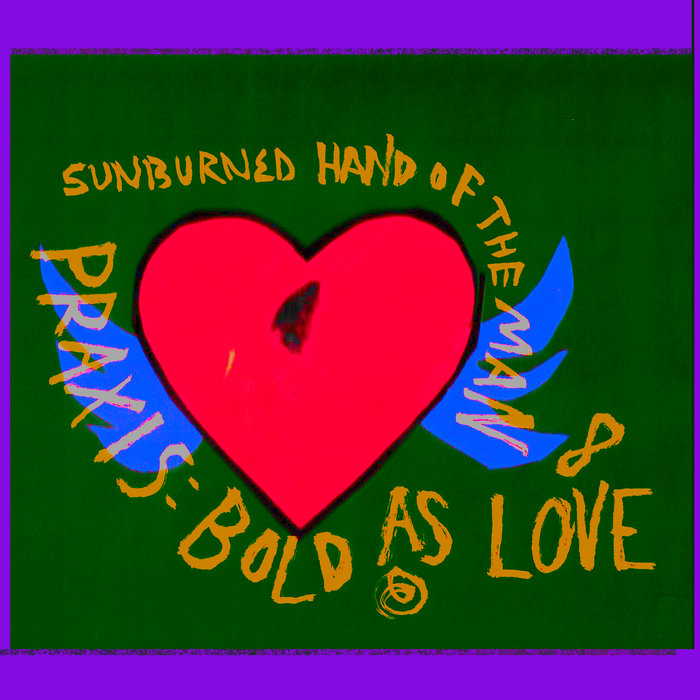
New Sunburned Hand of the Man album - Praxis: Bold As Love - from John, Ron, Rob & the gang. Sample track “Meal Ticket” has a flanged-out squish / loose beatnik funk vibe reminiscent of their early 2000’s Jaybird / Headdress era. (Jeez, is it really 20+ years since I first saw them play in a double bill with Jackie-O Motherfucker?) But this - “Mother Nature” - has a nicely woozy down-at-heel melancholic vibe. The lyrical imagery slowly becomes more absurd, tests its own limits, as its internal logic unspools, yet (paradoxically) at the same time it somehow becomes sadder, accrues more pathos. The lines “tried to break the law / but the Law was already broken” resonate with an awful contemporary truth. Shambolically beautiful.
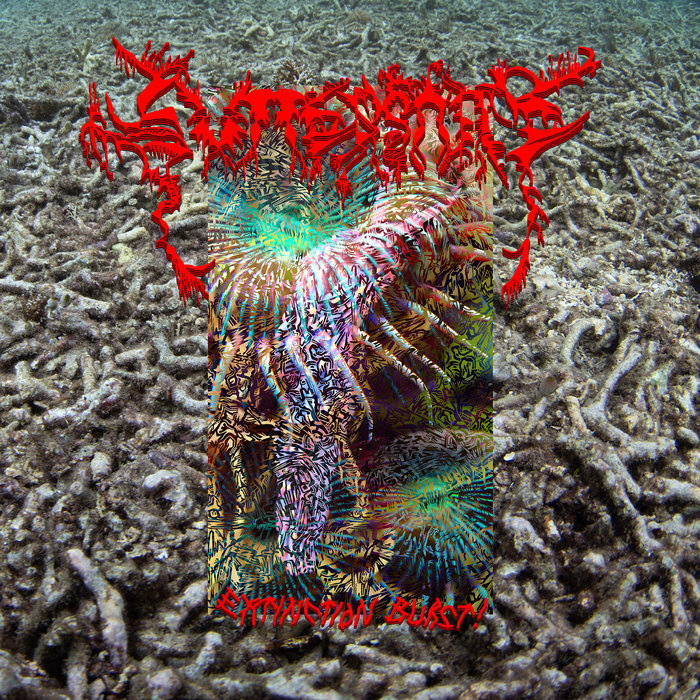
Gretchen and Bobby aka Guttersnipe are back with a new album - Extinction Burst! - and it’s quite a thing to behold / hear / apprehend. If you thought their earlier stuff was out there, this is something else. Guttersnipe channel a profound and sacred form of hysterical ecstasy - create musical egregores that are (1) an angry, appalled and terrified reaction to this fucked-up dying world; and (2) a cross-species crisis energy spell to save or transform it. Wonderful and brilliant. We need more radical thinker-performers like this. Abuntantia bless ‘em!
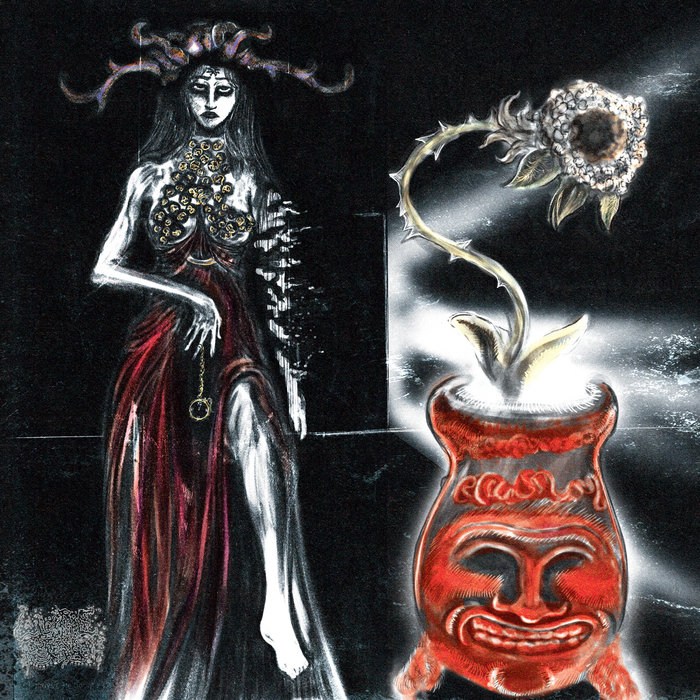
The super-prolific and talented Texas-based musician-producer, Garry “Sallow Moth” Brents, drops not one, but two fabulous albums back-to-back. First up is a breathless, synapse-shredding salvo of blastbeats from his Goregrind persona-project, Lureplasm, called Luridsysic Heirloom (Dig the great cover by LatticeParable!)
Then, to completely baffle and delight our branes, Garry releases an album that he describes as “for fans of ambient, instrumental trip-hop, and overall meditative soundscapes. Set in a timeline between Sallow Moth's Mossbane Lantern and the next album Hydrophilous Brood.” The music has an inventively mellow early-to-mid-90s vibe (though, being Garry, there is an innate restlessness in the music: perspectives / sounds / rhythms shift, but organically, not jarringly). This is a great listen listen, quietly evocative; not the sort of generic ambient slop that just washes over you. Love the detuned bell-like FM-ish synth sounds that occasionally appear, and the subtly stretched strings on “Cavern Sling”. Overall, the album reminds me of a classic Jonah Sharp / Spacetime Continuum releases, or maybe some of the really early Wagon Christ EPs. But more contemporary. The spaciously exotic (exotically spatial?) parallel-90’s feel is made more explicit by the retro-rendered cover artwork by Kamon McCoy.

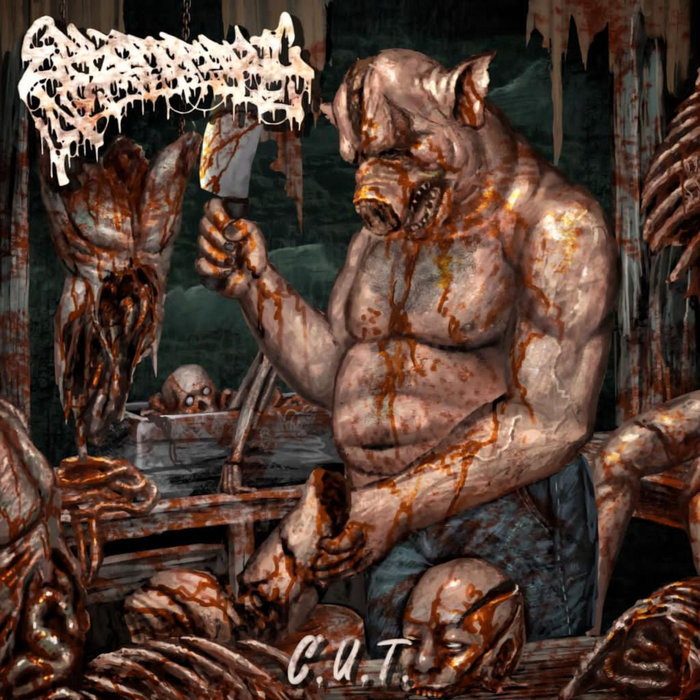
More Grindcore, this time from my own backyard: C.U.T. is the debut album by Taunton / Bridgwater-based Eproctophilic Necrophile, a particular favourite of mine, as regular readers of Zee Humane Debris will be aware. I’ve caught ‘em live five times now in Somerset and Bristol and they’re always great fun, and getting tighter and more entertaining with each show. C.U.T. is chocfull of old live / tape only faves, punchy and punk-as-fuck, a real ear-pleaser. The grue-splattered legend starts here! Love Thom’s bass intro on this; the strings are detuned so loose you could grate a human face on ‘em…
And here’s some more artwork by LatticeParable, just ‘cos I like it so much! This doesn’t have a title that I’m aware of.

There’s so much great stuff around at the moment that I could easily do an entire music-only issue-episode - and maybe I will - but let’s try’n put the handbrakes on this edition and get back onto a more regular broadcast schedule first, huh? Thanks for reading / listening / looking at this. I couldn’t do it without ya!
CHILL WITH KIKI
Goodnight from The Kikster. She’s pooped! As am I.
